

Testicular Mesothelioma: An Extremely Rare Asbestos-Related Cancer
By: Christopher M. Placitella Jul 15, 2026
Updated: August 31, 2026
Testicular mesothelioma begins in the lining around the testicles, called the tunica vaginalis. It is extremely rare — we have handled very few of these cases in our 40+ years of practice.
Key Takeaways
- Testicular mesothelioma begins in the tunica vaginalis, the lining around the testicles, and is extremely rare.
- Symptoms include scrotal swelling or a palpable lump, pain or heaviness, and fluid buildup known as hydrocele.
- It is often mistaken for a hernia or benign cyst and is usually discovered unexpectedly during surgery for another suspected problem.
- The primary treatment is orchiectomy, sometimes followed by chemotherapy or radiation, with close long-term monitoring for recurrence.
Symptoms of Testicular Mesothelioma
- Swelling or a lump in the scrotum — a visible or palpable enlargement or mass
- Pain or heaviness — discomfort or a sensation of weight in the scrotum
- Fluid buildup around the testicle (hydrocele) — accumulation of fluid causing swelling
Diagnosis
This condition is often mistaken for more common testicular issues such as hernias or benign cysts. It is usually discovered unexpectedly during surgery performed for another suspected problem, and a definitive diagnosis is made only through pathological examination of biopsy tissue.
Treatment and Long-Term Monitoring
Surgery to remove the affected testicle, known as orchiectomy, is the primary treatment. If the disease has spread beyond the testicle, chemotherapy or radiation therapy may be recommended. After treatment, close monitoring is essential, since recurrence can occur and early detection is key to successful management.
Because testicular mesothelioma is so rare, there is limited data on long-term outcomes — but some patients have had good outcomes after surgery, especially when the disease is caught early and has not spread.
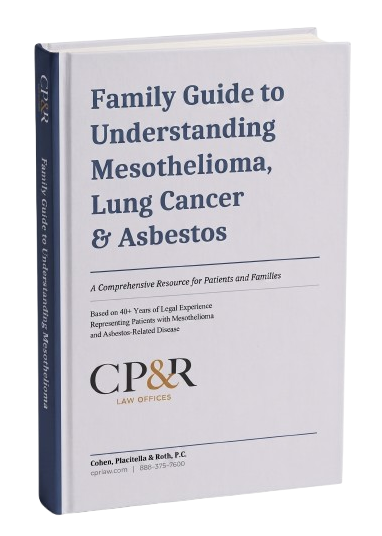
Download the Free Family Guide to Understanding Mesothelioma, Lung Cancer, & Asbestos Book
Our 100+ page Family Guide to Understanding Mesothelioma, Lung Cancer & Asbestos walks you and your family through diagnosis, treatment options, and your legal rights, in plain language, at no cost.
Talk to Cohen, Placitella, Roth & Goslee About Your Diagnosis
Testicular mesothelioma is exceptionally rare, and most cases are found unexpectedly during unrelated surgery. Our mesothelioma attorneys have represented patients and families for more than 40 years. Contact Cohen, Placitella, Roth & Goslee for a free consultation. Call us at (888) 324-7683 or contact us online. We work on a contingency fee basis. You pay nothing unless we recover compensation for you.
Attorney Advertising. Prior results do not guarantee a similar outcome. This article is for informational purposes only and does not constitute legal or medical advice. Consult a qualified healthcare provider regarding diagnosis and treatment, and a qualified attorney regarding your legal rights. Cohen, Placitella, Roth & Goslee, P.C. is licensed to practice in New Jersey, Pennsylvania, and other jurisdictions, and represents clients nationwide with qualified co-counsel.
Meet Our Asbestos & Mesothelioma Attorneys
-

Christopher M. Placitella
Shareholder VIEW BIO -

Rachel A. Placitella
Member VIEW BIO -

William L. Kuzmin
Member VIEW BIO -

Jared M. Placitella
Member VIEW BIO -

Justin I. Placitella
Associate VIEW BIO -

Drew M. Renzi
Associate VIEW BIO


Get the Legal Help You Need Today
Please fill out this form to schedule your free consultation. Questions? Review our FAQs.
Footer Contact Form
"*" indicates required fields
This site is protected by reCAPTCHA and the Google Privacy Policy and Terms of Service apply.