

Grok AI Deepfake Lawsuit: What Parents of Minor Victims Need to Know
By: Matthew A. Capacete May 20, 2026
Updated: October 6, 2026
Research studies estimate that Grok, the AI image generator built by Elon Musk’s company xAI and integrated into the X platform, has generated millions of sexualized images – including child sexual abuse material (CSAM) placed directly into the hands of sexual predators.
For many families, the discovery comes without warning: a teenager receives a message from a stranger. A school administrator calls. A parent finds altered images of their child that started as a yearbook portrait or a homecoming photo and were transformed, without anyone’s knowledge or consent, into sexually explicit content.
If that has happened to your family, this page explains what occurred, what legal options currently exist, and how Cohen, Placitella, Roth & Goslee — a Philadelphia-based trial law firm serving families throughout Pennsylvania, New Jersey, and nationwide — is currently handling these cases.
What Happened: How Grok AI Created Explicit Images of Children
Grok is an AI chatbot and image generator developed by xAI and available to subscribers on X, formerly Twitter. Grok’s image generation model was built with weak safety filters leaving it open to misuse by anyone seeking to generate explicit content involving real minors. Researchers have estimated that Grok produced more than 23,000 sexualized images of children during an 11-day window between December 29, 2025 and January 9, 2026.
In practice, a user provides a photograph of a real person – a child’s Instagram photo, a school website image, a yearbook picture – and directs Grok to alter or “undress” the subject. The tool generates an explicit version that can be saved and distributed across any number of platforms.
How Children’s Photos Were Targeted
The source photographs in many documented cases came from exactly the kinds of places parents expect to be safe: school yearbooks, publicly accessible social media accounts, and school websites. In court filings describing the experience of Tennessee teenagers, one victim learned that sexually explicit deepfakes had been created from her homecoming photo and her school yearbook portrait, and that these images had been distributed to a Discord server without her knowledge. She found out only after receiving an anonymous message.
Manipulated images are often shared through private or semi-private channels: text messages, emails, WhatsApp, Discord, Telegram, file-sharing services. Many families have not yet discovered whether their child was targeted at all.
Individual Claims vs. Class Actions: What Families Should Know
As coverage of the Grok lawsuits has grown, several law firms have announced class action filings against xAI.
A class action is a lawsuit in which many plaintiffs are joined together into a single legal proceeding. The plaintiffs share legal strategy and discovery, and any outcome — settlement or verdict — is distributed across the group. Class actions work best when large numbers of people have been harmed by the same conduct and individual damages would be difficult to pursue on their own.
An individual claim is a lawsuit filed on behalf of a single person or family. The legal strategy is specific to that family’s facts, the proceedings are separate from any other case, and the outcome is determined by that family’s individual circumstances.
Protecting Your Privacy
When AI tools generate sexually explicit imagery from a child’s photograph without that child’s knowledge or consent, it violates that child’s right to control how their own image and likeness appears in the world — a right that belongs to every person, including minors.
New Jersey’s deepfake statute, signed by Governor Murphy in April 2025, gives victims a direct right to bring civil claims for actual damages, punitive damages, and attorneys’ fees — and explicitly preserves common law privacy torts including invasion of privacy, misappropriation of identity, and false light.
Pennsylvania’s Act 35, also signed in 2025, establishes criminal liability for creating a “forged digital likeness” of a real person without their consent and with intent to defraud or injure.
That distinction matters for families and victims. Class action filings are public court records, and the joint discovery process involves information shared across many parties. Individual cases can be structured to give families more control over whether their child’s identity appears in public filings at all.
At CPR&G Law, each family’s case is handled separately, with strict confidentiality protocols in place throughout.
The Legal Case Against xAI and Grok
A Product Liability Case First and Foremost
Before examining the specific statutes that govern these cases, it’s important to understand the fundamental legal theory at the center of CPR&G Law’s approach: Grok is a defective product, and xAI is its manufacturer.
Product liability is a well-established area of law that holds manufacturers accountable when their products are defectively designed and that defect causes foreseeable harm to the people who use or come into contact with them. It does not require proving intent to harm. What matters is that the product was unreasonably dangerous as designed, and that dangerous design caused injury.
Grok fits squarely within that framework. The core allegations against xAI are that its engineers deliberately built the Grok image generation model with weak safety filters. This was a documented design decision, not an accidental oversight. The system was reportedly built to assume “good intent” when users submitted terms like “teenage” or “girl.” xAI then marketed the explicit image generation capability as “Spicy Mode,” restricted it to paying subscribers, and positioned it as a premium feature. The result was a product engineered in a way that made the sexual exploitation of real people, including children, entirely foreseeable.
CPR Law has decades of experience holding corporations accountable for dangerous products put into the stream of commerce despite foreseeable and preventable risks. These xAI cases apply that same principle to an AI platform that generated and distributed child sexual abuse material at industrial scale.
What Laws Did xAI Violate?
Several federal and state laws are potentially applicable in cases involving Grok-generated content depicting minors — including content that meets the legal definition of child sexual abuse material (CSAM):
Federal:
- Masha’s Law provides civil remedies for victims of child sexual exploitation, including minimum damages of $150,000 per violation.
- The TAKE IT DOWN Act, signed into federal law in May 2025, makes it a federal crime to knowingly publish nonconsensual intimate deepfakes involving minors. Beginning May 19, 2026, the law will also require online platforms to remove such content within 48 hours of receiving a valid takedown request. Intentional sharing of deepfakes of a minor carries potential criminal penalties of up to three years imprisonment.
- Additional federal statutes addressing child exploitation and nonconsensual distribution of intimate imagery may apply depending on the facts of a given case.
State:
- Pennsylvania and New Jersey both have consumer protection and privacy statutes that may be relevant to individual cases, depending on specific circumstances.
- As of 2025, 48 U.S. states had enacted some form of deepfake legislation — a number that has grown significantly in recent years as lawmakers have responded to this type of harm.
What Damages Can Families Seek?
The damages available in any case depend on the specific facts and applicable law, and no outcome can be guaranteed. That said, the legal claims currently being pursued in active xAI/Grok litigation draw on several federal and state statutes:
Masha’s Law is a federal civil statute that provides legal remedies for victims of child exploitation, including civil damages of at least $150,000 per violation. It is among the statutes being invoked in active federal litigation against xAI.
Emotional, Psychological, and Reputational Harm from discovering and contending with the distribution of this content can form the basis for compensatory damages in civil litigation.
Compensatory Damages are monetary awards granted to a plaintiff to compensate for losses, injuries, or harm suffered due to another party’s wrongful actions or negligence. These damages aim to restore the injured party to the position they were in before the incident occurred, and include medical bills, lost wages, medications and treatment, including emotional pain and suffering.
Injunctive relief, asking the court to require xAI to implement meaningful safeguards, is also part of active filings.
Punitive Damages, where conduct is found to be willful, reckless, or in conscious disregard of the rights of others, courts may award punitive damages not to compensate for a specific loss, but to punish egregious behavior and deter it from happening again.
Emotional, Psychological, Physical, and Reputational Harm. Discovering and contending with the distribution of sexually explicit imagery of your child can affect victims physically, psychologically, and socially. The psychological harm of learning such images exist, and that they may continue to circulate, is well-documented. Physical harm, which may manifest in a variety of ways, can also form part of these claims. Taken together, these harms form the basis for compensatory damages in civil litigation.
Signs Your Child May Have Been Targeted by Grok
Many families learn about these situations through third parties, or not at all. If you’re unsure whether your child was affected, these are the warning signs that have surfaced most often in documented cases:
- Your child received a message from someone, known or unknown, referencing explicit images of them.
- You or your child came across manipulated images on platforms like Discord, Telegram, or social media.
- A school counselor, administrator, or another parent contacted you about images of your child circulating online.
- Your child has become withdrawn, distressed, or has mentioned something that happened online without fully explaining it.
If you have any reason to believe your child may have been targeted, even without confirmation, a confidential consultation with a Grok AI deepfake attorney is a reasonable step toward understanding your options.
How CPR&G Law Is Handling These Cases
Cohen, Placitella, Roth & Goslee is a Philadelphia-based trial law firm with decades of experience in personal injury claims and holding corporations accountable for dangerous products. The firm represents clients throughout Pennsylvania and New Jersey and accepts cases from families in any state.
For these xAI/Grok matters, the firm recommends that clients file individual cases. Here is what that means in practice:
Confidentiality throughout. Each case is handled individually, with strict confidentiality protocols at every stage. Protecting your child’s identity is not an afterthought — it is built into how these cases are structured and managed.
Individual cases. Your family’s case is its own proceeding, with legal strategy developed around your specific facts and circumstances. You are not grouped into a class filing.
Philadelphia roots, national reach. CPR&G Law is based in Philadelphia and has represented families throughout Pennsylvania and New Jersey for decades. The firm also accepts cases from families in any jurisdiction across the United States, and has the complex litigation experience to pursue complex claims against large corporate defendants.
Contingency fee basis. CPR&G Law does not charge legal fees unless compensation is recovered on your behalf. Fees are calculated as a percentage of the recovery; the firm is also reimbursed for litigation costs incurred in pursuing the case. This is explained in detail during the initial consultation and in the fee agreement.
Speak With a CPR&G Law Attorney
You don’t have to fight this alone.
Cohen, Placitella, Roth & Goslee offers a free, strictly confidential consultation for families who believe their child may have been affected by Grok-generated content. Your child’s identity will be protected throughout any conversation with the firm. There is no obligation, and no legal fees are charged unless the firm recovers compensation on your behalf.
Families considering legal action should be aware that statutes of limitations apply — the time available to file a lawsuit is limited by law and varies by state and by the specific claims involved. Speaking with an attorney sooner rather than later helps preserve your legal options.
Contact Cohen, Placitella, Roth & Goslee today.
Call (888) 729-7600 or contact us online.
About the Author
-
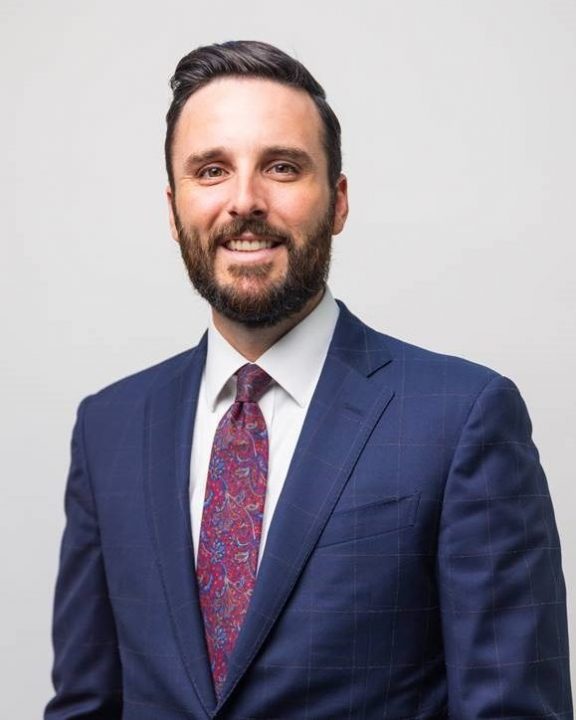
Matthew A. Capacete
Associate VIEW BIO
Get the Legal Help You Need Today
Please fill out this form to schedule your free consultation. Questions? Review our FAQs.
Footer Contact Form
"*" indicates required fields
This site is protected by reCAPTCHA and the Google Privacy Policy and Terms of Service apply.