

Peritoneal Mesothelioma: Symptoms HIPEC Surgery and What to Expect
By: Christopher M. Placitella Jul 2, 2026
Updated: August 31, 2026
Peritoneal mesothelioma develops in the peritoneum — the lining of the abdomen. It is less common than pleural mesothelioma, but we have represented many clients with this diagnosis.
Key Takeaways
- Peritoneal mesothelioma develops in the peritoneum, the lining of the abdomen, and accounts for approximately 15% to 20% of mesothelioma cases.
- Symptoms include abdominal pain or swelling, bloating, nausea, unexplained weight loss, and ascites.
- The most effective treatment for eligible patients is cytoreductive surgery combined with HIPEC, which has extended survival for many patients, though not everyone qualifies.
- Cohen, Placitella, Roth & Goslee has represented peritoneal mesothelioma patients and families for more than 40 years and offers a free consultation.
Symptoms of Peritoneal Mesothelioma
Based on what our clients report and consultations with experts, common symptoms include:
- Abdominal pain or swelling — discomfort or visible distention in the stomach area
- Bloating or feeling full quickly — a sensation of fullness after eating small amounts, which can indicate fluid buildup
- Nausea, vomiting, or bowel changes — digestive issues such as queasiness, vomiting, diarrhea, or constipation
- Unexplained weight loss — losing weight without changes in diet or activity
- Ascites — fluid buildup in the abdomen that causes swelling and pressure
Diagnosing Peritoneal Mesothelioma
- CT scan or ultrasound — imaging to visualize internal structures and detect tumors, fluid, or abnormalities
- Paracentesis — a needle inserted into the abdominal cavity removes fluid for testing
- Biopsy — tissue removal, often via laparoscopy, confirms the diagnosis under a microscope
HIPEC: The Leading Treatment for Peritoneal Mesothelioma
The most effective treatment for eligible patients combines cytoreductive surgery with HIPEC (Hyperthermic Intraperitoneal Chemotherapy). Surgeons remove all visible tumors from the abdomen, then circulate heated chemotherapy drugs directly inside the abdominal cavity. This approach has significantly extended survival for many patients, with some living for years after treatment.
Not all patients are candidates. HIPEC requires that the disease be confined to the abdomen and that the patient be healthy enough for major surgery — your oncologist and a specialized surgical oncologist will determine eligibility.
Other Treatment Options
- Systemic chemotherapy — delivered through an IV and travels throughout the body
- Palliative procedures — treatments to drain fluid and ease pain, even if they do not treat the cancer itself
Questions worth asking your doctor include whether you are eligible for HIPEC, which centers specialize in the procedure, and what the realistic prognosis looks like with and without surgery.
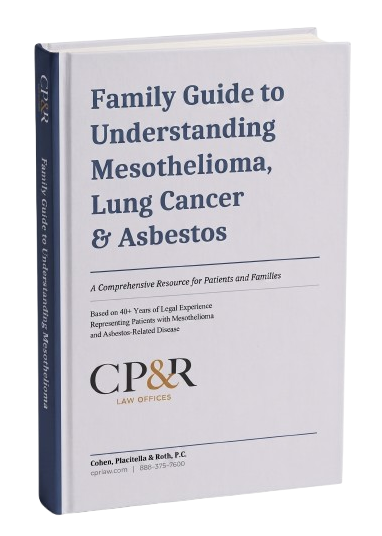
Download the Free Family Guide to Understanding Mesothelioma, Lung Cancer, & Asbestos Book
Our 100+ page Family Guide to Understanding Mesothelioma, Lung Cancer & Asbestos walks you and your family through diagnosis, treatment options, and your legal rights, in plain language, at no cost.
Talk to Cohen, Placitella, Roth & Goslee About Your Diagnosis
Peritoneal mesothelioma is less common than the pleural form, and treatment eligibility depends heavily on individual circumstances. Our mesothelioma attorneys have represented patients and families for more than 40 years. Contact Cohen, Placitella, Roth & Goslee for a free consultation. Call us at (888) 324-7683 or contact us online. We work on a contingency fee basis. You pay nothing unless we recover compensation for you.
Attorney Advertising. Prior results do not guarantee a similar outcome. This article is for informational purposes only and does not constitute legal or medical advice. Consult a qualified healthcare provider regarding diagnosis and treatment, and a qualified attorney regarding your legal rights. Cohen, Placitella, Roth & Goslee, P.C. is licensed to practice in New Jersey, Pennsylvania, and other jurisdictions, and represents clients nationwide with qualified co-counsel.
Meet Our Asbestos & Mesothelioma Attorneys
-

Christopher M. Placitella
ShareholderChristopher M. Placitella is a Shareholder at Cohen, Placitella, Roth & Goslee and a trial lawyer certified by the New Jersey Supreme Court, widely recognized as one of the country's leading authorities on mass torts, class actions, asbestos, defective products, and environmental injuries. He has served as lead counsel in landmark cases covered by the New York Times, the Wall Street Journal, and Reuters, and has held leadership positions in the New Jersey Association for Justice and the American Association for Justice.
VIEW BIO -

Rachel A. Placitella
MemberRachel A. Placitella is a Member of Cohen, Placitella, Roth & Goslee, handling complex litigation matters including asbestos, product liability, and personal injury cases in New Jersey and Pennsylvania from investigation through trial or settlement. She previously served as an assistant prosecutor for Monmouth County, New Jersey. Ms. Placitella is the former Chair of the Product Liability Section of the New Jersey State Bar Association and currently chairs the Women's Trial Lawyer Caucus of the New Jersey Association for Justice.
VIEW BIO -

Jared M. Placitella
MemberJared M. Placitella is a Member of Cohen, Placitella, Roth & Goslee, representing individuals in complex civil litigation across New Jersey and Pennsylvania, with a focus on class actions, asbestos, mass torts, products liability, and catastrophic injury claims. He serves on the Board of Governors and Executive Committee of the New Jersey Association for Justice, where he currently serves as Secretary, and has appeared as the Association's amicus counsel before the New Jersey Supreme Court and Appellate Division. Mr. Placitella has been recognized as a National Trial Lawyers Top 100 and Top 40 Under 40, as well as a Rising Star by both New Jersey and Pennsylvania Super Lawyers. He is admitted to practice before the state courts of New Jersey, Pennsylvania, and New York, and several federal courts including the U.S. Court of Appeals for the Third Circuit.
VIEW BIO -

Justin I. Placitella
AssociateJustin I. Placitella is an associate at Cohen, Placitella, Roth & Goslee, practicing in the firm's Red Bank, New Jersey office in the areas of personal injury, class action, mass tort, environmental law, consumer fraud, and products liability. Before joining the firm, he served as an Assistant Prosecutor in the Passaic County Prosecutor's Office for nearly seven years, gaining substantial trial experience across multiple units including Domestic Violence, Drug Court, and the Trial Unit. Mr. Placitella graduated from Roger Williams University School of Law in 2013 and is admitted to practice in New Jersey and the U.S. District Court for the District of New Jersey.
VIEW BIO -

Drew M. Renzi
AssociateDrew M. Renzi is an associate at Cohen, Placitella, Roth & Goslee, focusing his practice on class action, environmental, and products liability litigation in Pennsylvania and New Jersey. He earned his J.D. from Tulane University in 2019, where he served as a student attorney in the Tulane Environmental Law Clinic and as a fellow for the Tulane Institute on Water Resources Law & Policy. Mr. Renzi is admitted to practice in Pennsylvania, New Jersey, and Massachusetts.
VIEW BIO


Get the Legal Help You Need Today
Please fill out this form to schedule your free consultation. Questions? Review our FAQs.
Footer Contact Form
"*" indicates required fields
This site is protected by reCAPTCHA and the Google Privacy Policy and Terms of Service apply.